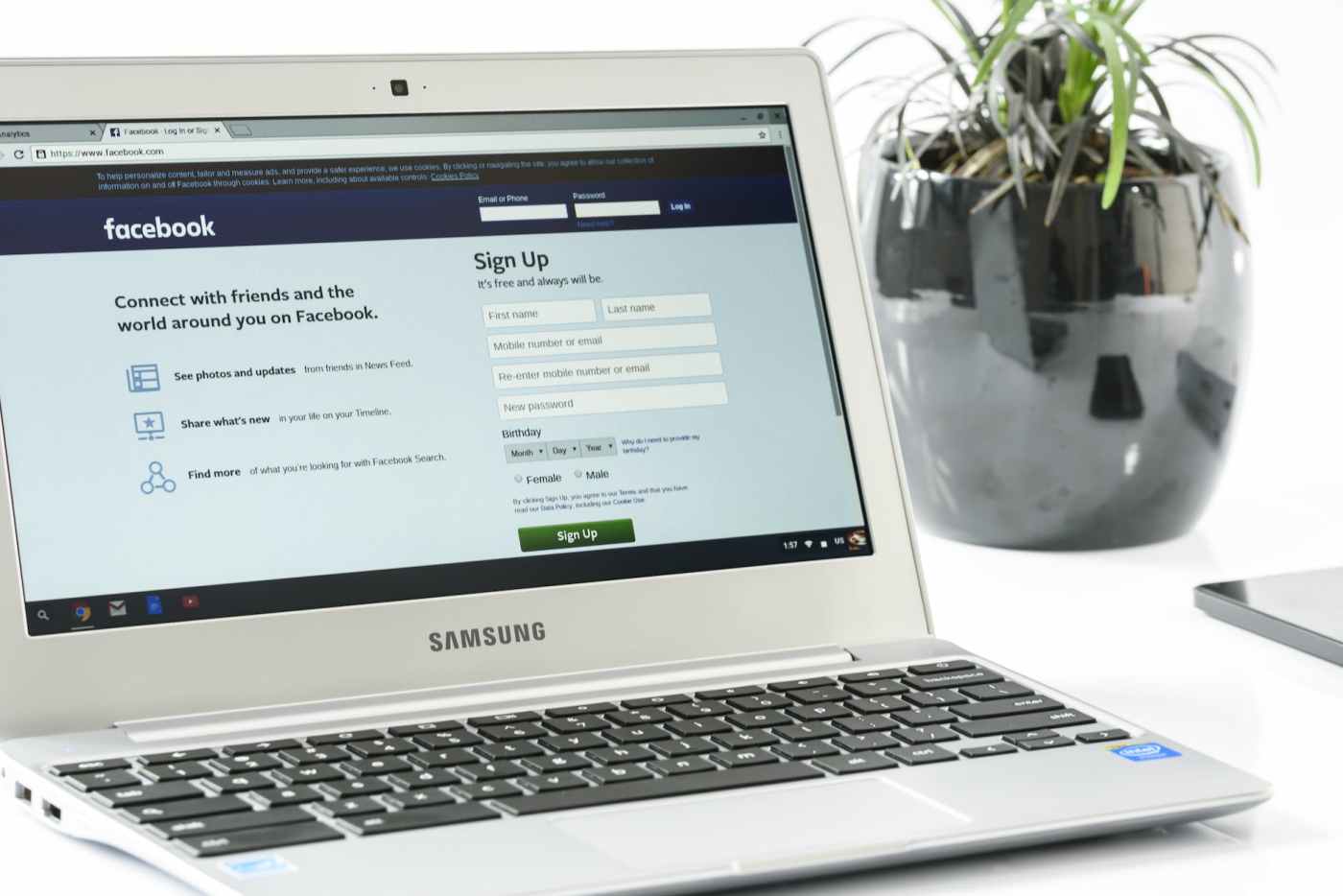
Rhode Island PBS has accounts on a range of social media including Instagram, Twitter and Facebook. Prior to my involvement, there was not a designated individual assigned to their social media, nor was there a plan in place for the direction of their online presence. Throughout each platform, I had the responsibility of creating graphics using the program Canva, exploring resources that PBS had nationally and locally and highlighting advancements for/from Rhode Islanders. Lastly, I instituted the use of online documents that prepared posts and planned them using Google applications and Meta Business Suite content manager.
Education Services introduced its Facebook in 2018, and since then the account has received 220 like and 324 followers. Gaining access to this platform meant I could make sharing content that leads to other websites easier and their long-form captions to share more information. Below, my content ranges from curated graphics, the success of URI’s marine biology program and a praiseworthy local science teacher.
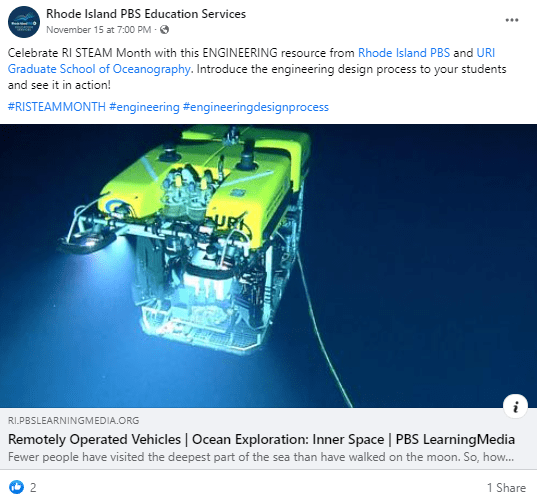
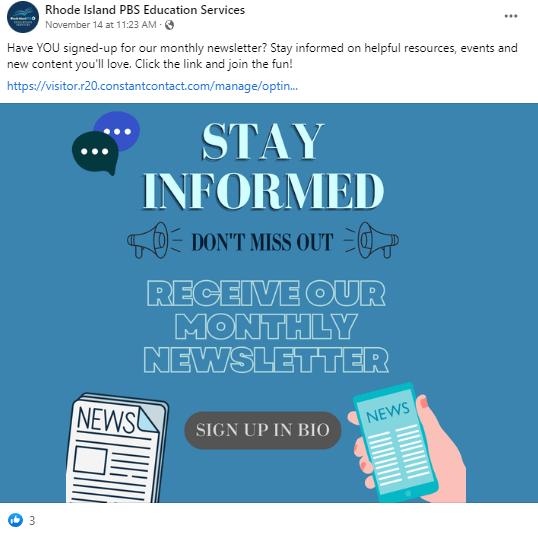
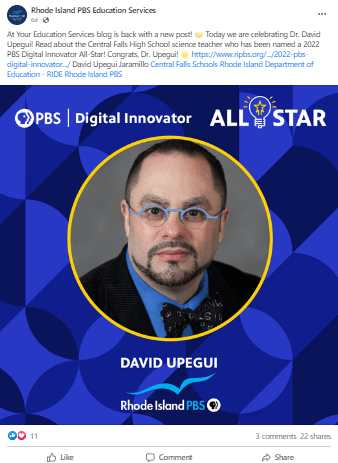
The first post explores the local success and exploration of education. It links to a video and lesson plan from their teaching resource PBSLearningMedia. Through this post, Rhode Islanders who follow can gain an understanding of what URI students are learning about ocean exploration and inspire other students interested in STEM.
The second post is a graphic that I created to motivate followers to further engage with Education Services via the monthly newsletter.
The third post highlights Dr. David Upegui, a science teacher who goes above and beyond for his students. Dr. Upegui won the award of PBS Digital Innovator All-Star. Granting the educator this award gifts him tools to integrate more media and PBS resources into his teaching and connect with other honorable educators. Visible in the image is the excitement from the community and Upegui’s friends and families through likes comments and shares.
The department’s Instagram has amassed 721 followers since its creation in 2018. Before I took over Instagram, it lacked differentiation in posts and consistency. I integrated graphics, videos and images around 2-4 times a week. Knowing the platform is reliant on visual elements, I attempted to keep imagery with a similar color scheme and theme.
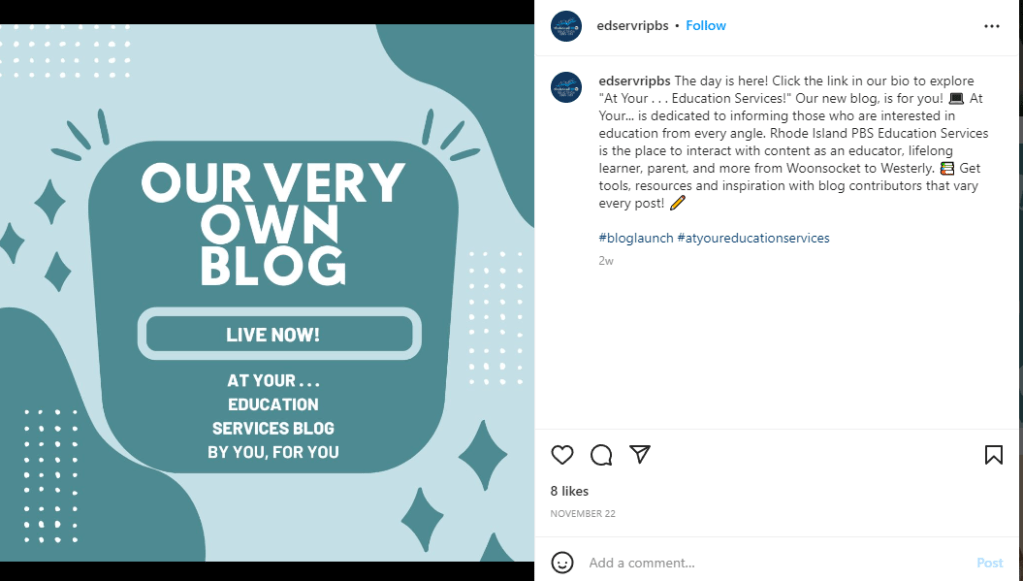
When the blog was officially launched, I created a graphic that served as an announcement and call-to-action to visit the website. I maintained the theme of typically using blue elements and encouraging text. To create the image I used Canva. I closed the post with the hashtags #bloglaunch and #atyoureducation services to garner more likes and to have a tag that can be used when other posts encourage interacting with the blog.
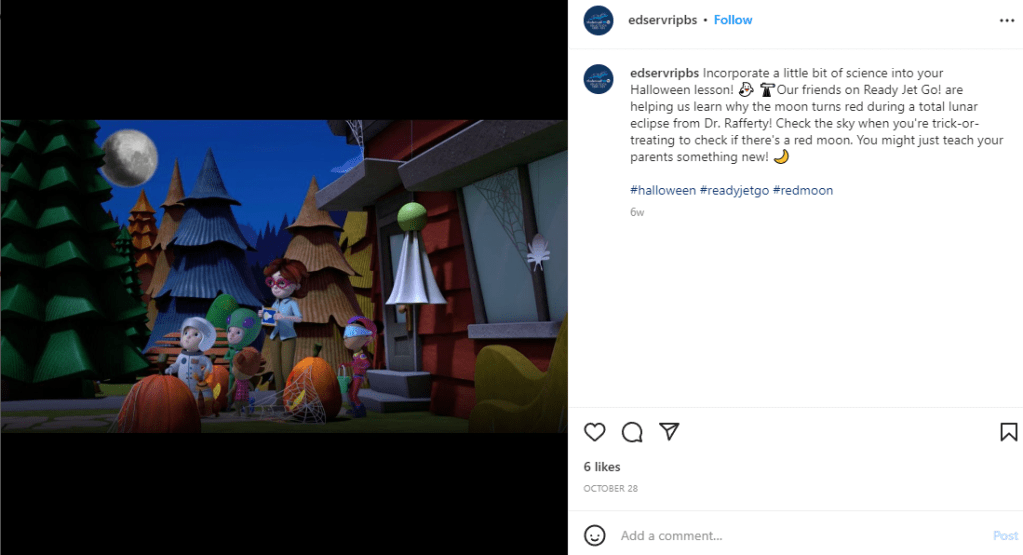
This other post was a part of an effort to post a Halloween-related post weekly throughout the month of October. Education Services relies on its audience of teachers, parents and students. Ready Jet Go is a children’s show on PBS that incorporates science into an animated show for young children. This episode explores red moons during a lunar eclipse. A screenshot of the episode influences parents/teachers to follow the link in the bio to the full episode and student work to accompany it. The hashtags that closed the posts were #halloween, #readyjetgo and #redmoon
Twitter was included in their active social media accounts that I had access to. Controlling all accounts meant that I kept consistency among all platforms. Although, Twitter’s short-form text-based website forced me to condense and refine the copy I used for other socials. I also utilized their link and video features.
 Catherine Fiocco Portfolio
Leave a comment